
I Fell in Love With Tomatoes at an Early Age
By Marek Warunkiewicz.
First in a series we are calling “DIG Garden Experts”
I fell in love with tomatoes at an early age. I was born in Warsaw, Poland in 1954, into an extended family that lived in three different cities. My mother’s family was from Częstochowa, a city in the southern part of Poland. Close by was a tiny (and I do mean tiny) village called Gidle where lived a woman who became one of my favourite relatives, my grandmother’s youngest sister, Helena.
She was an unusual sort, the village doctor/herbalist, beekeeper, small farmer, keeper and lover of animals. I spent many idyllic summer days with her and her daughter, Małgosia. In summer, everything was seasonal and fresh, carrots, potatoes, berries, salads, radishes and of course, tomatoes. Małgosia and I would be in the garden, picking them off the vines and relishing every juicy bite. Love at first bite.
When we finally ended up in Canada in 1963, a good tomato was a rare treasure. It was the early 60s and mass production was the word of the day. But in the summer, outside of the Island of Montreal, were large communities of small farmers. When we lived at our cottage in a town called Rawdon, just a few minutes’ walk away, was a farmers’ stand and voila, flavour!
Moving to Toronto in the late 70s, I again experienced a dearth of good tomatoes. Eventually, I married. Bought a house with a nice garden in back, and while we were at a garden centre buying flowers, I came across tomato seeds being sold. The addiction started with eight plants and a rabbit hole of learning I gladly dropped into.
I now have over 400 varieties of tomato seeds, grow 60–70 plants for my family and friends, and start an average of 500 plants for local community gardens that grow for local food banks as donations. My secondary interest is the pepper family. From sweet to super-hot, I grow and love them.
When asked to pen an article for the DIG Newsletter, after a few ideas were tossed around, the decision was made for me to introduce my favourites, ones I grow year after year. The other thing about me that you need to know is that I love stories, stories that often become myth. Oh, and sharing, I love sharing the things I am passionate about and hearing other people’s stories, both of their life adventures and their own passions. Forgot to mention: my other, some would say dominant, passion is food and cooking it.
What makes these nineteen tomatoes my perennial favourites? Every one is full-flavoured, beautiful to look at, and reliably rewarding to grow. But they’re also, each in their own way, a story. Some carry the names of the families who loved and saved them across generations. Some crossed oceans and survived wars. Some were bred by dreamers with no formal training who changed the course of tomato history. That’s the magic of the heirloom community, we share, we help each other, and we eat extraordinarily well.
All tomatoes share the same scientific name, Solanum lycopersicum, but each variety has their own name and, often, their own story. In alphabetical order, off we go on our journey through my tomatolandia.
ALICE’S DREAM
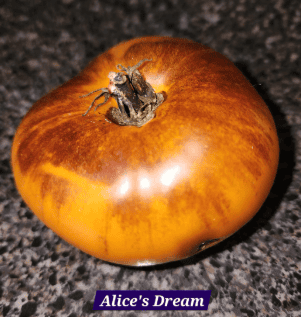
(From Etsy.com)
Sprouting: 5–8 days
Days to maturity: ~70–75 days
Alice’s Dream is one of those tomatoes that makes you stop and look before you do anything else. The fruits are medium-sized, smooth, and slightly flattened, golden-yellow with deep indigo-purple shoulders that develop in full sun, as though the sky at the end of a summer evening decided to settle on a tomato. Which, now that I think about it, is not a bad place to settle at all.
Flavour is rich and beautifully balanced, with a gentle sweetness and a soft citrus brightness. Smooth, juicy flesh, excellent for slicing or a fresh summer salad. Vigorous and productive through the warmest part of the season, it earns its place on flavour alone, the looks are simply a bonus.
The History:
Alice’s Dream comes from the modern artisan breeding movement, that wonderful community of independent breeders and seed collectors who develop new varieties in their own gardens and share them through exchanges and small seed companies. It brings together the bright colour and flavour of traditional yellow heirlooms with dramatic anthocyanin pigmentation from newer breeding lines, a trait that traces back to crosses with wild tomato relatives. Old heirloom flavour, new breeding imagination, born not in a laboratory but in someone’s garden. I feel a certain kinship with that.
ANANAS NOIR
Sprouting: 6–10 days
Days to maturity: ~80–85 days
Ananas Noir (“Black Pineapple”) was developed in Belgium by tomato enthusiast Pascal Moreau. The variety produces large, marbled fruits streaked with green, red, and gold, and reveals dramatic mosaic patterns when sliced.
Flavour is complex and rich, with sweet, fruity notes and a mild smokiness. The tomato is prized for fresh slicing because of its juicy flesh, striking appearance and above all, taste. It is one of those tomatoes that stops people mid-bite.
The History:
Ananas Noir comes from a modern European wave of heirloom-style breeding focused on dramatic coloration and flavour. Developed in Belgium, it quickly spread through specialty seed networks and became popular among gardeners and chefs seeking visually striking and full-flavoured tomatoes. Pascal Moreau’s work is a wonderful reminder that the heirloom story is still being written.
AUNT GINNY’S PURPLE
Sprouting: 6–9 days
Days to maturity: ~80 days
Aunt Ginny’s Purple produces large pink-purple beefsteak tomatoes with rich, traditional tomato flavour.
The taste is balanced, with strong sweetness and moderate acidity, making it excellent for sandwiches and fresh slicing. It is one of those tomatoes that reminds you what a summer sandwich is supposed to taste like.
The History:
This heirloom traces back to the family of Virginia “Ginny” Carter in Tennessee. For generations the family saved seeds from their favourite tomato. The variety eventually entered the heirloom seed community when family members shared it with collectors, a perfect demonstration of how many heirlooms survive simply because gardeners continue saving and sharing seeds. Ginny would be pleased.
BERKELEY TIE DYE PINK
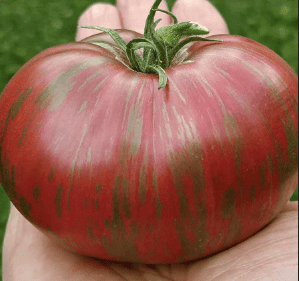
(From huertafamiliar.cl)
Sprouting: 6–10 days
Days to maturity: ~75–80 days
Berkeley Tie-Dye Pink produces large pink fruits with distinctive green striping reminiscent of tie-dyed fabric. Sliced on a plate, it is almost too pretty to eat. Almost.
Flavour is bright, complex, and slightly fruity with beautifully balanced acidity. The flesh is juicy and visually dramatic when sliced.
The History:
This variety was bred by Brad Gates of Wild Boar Farms in California. Gates is known for developing visually striking tomatoes that combine heirloom flavour with bold coloration, a true artist of the tomato world. Berkeley Tie-Dye Pink is a joyful result of the modern artisan tomato breeding movement.
BLACK SEA MAN
Sprouting: 5–9 days
Days to maturity: ~70–75 days
Black Sea Man is a compact, productive tomato producing dark mahogany fruits with rich flavour. It is one of those varieties that punches well above its weight.
The taste is full and slightly smoky, with moderate sweetness typical of the great dark heirloom tomatoes. Dense flesh, deep colour, and bags of character.
The History:
The variety likely originated in the Black Sea region of Russia or Ukraine, where generations of gardeners selected tomatoes suited to cooler climates and shorter seasons. That heritage makes it a natural fit for Canadian gardens, and one of the reasons I return to it every year.
DR. WYCHE’S YELLOW
Sprouting: 6–10 days
Days to maturity: ~80–85 days
Dr. Wyche’s Yellow produces large golden-yellow beefsteak tomatoes with mild sweetness, low acidity, and luscious, meaty fruit. The flesh is smooth and richly coloured, sunshine on a plate.
It is a tomato I love to serve to guests who think they don’t like yellow tomatoes. One slice usually changes their mind.
The History:
The tomato is named after Dr. John Wyche, a physician who later joined a travelling Wild West show associated with the Miller Brothers 101 Ranch circus. After retiring he settled in Oklahoma and grew the large yellow tomato that later bore his name. Only in tomatolandia do you find stories like this.
EARL OF EDGECOMBE
Sprouting: 6–10 days
Days to maturity: ~75–80 days
Earl of Edgecombe produces medium to large golden-orange fruits with a smooth, glossy skin and an almost tropical sweetness. The colour is extraordinary, a deep, burnished amber that glows in the summer light.
Flavour is rich and fruity with low acidity, making it one of the most crowd-pleasing tomatoes in the garden. Children who claim to dislike tomatoes have been known to change their minds at first bite.
The History:
This heirloom originated in New Zealand and takes its name from a district on the North Island. Seeds made their way into the international heirloom community through seed savers, and it has since found devoted growers around the world. It is a reminder that the global tomato community truly knows no borders.
GRANNY CANTRELL
Sprouting: 6–10 days
Days to maturity: ~80–85 days
Granny Cantrell produces extremely large pink beefsteak tomatoes with excellent, classic flavour. The taste is rich, sweet, and deeply satisfying, with dense, juicy flesh that stands up beautifully to anything you put it with.
This is a tomato for people who want a proper beefsteak, big, meaty, and unapologetically delicious.
The History:
This tomato was preserved for many years by Lettie Cantrell, known as Granny Cantrell, in eastern Kentucky. The seeds were passed through the family garden for generations until they were shared with heirloom tomato collectors. It is the kind of story that makes the heirloom world so meaningful, a woman’s lifetime of love for a single tomato, now available to all of us.
GREEN ZEBRA (Marek’s favourite)
Sprouting: 5–8 days
Days to maturity: ~75 days
Green Zebra produces small to medium fruits with distinctive bright green stripes over a chartreuse base, stunning in the garden and on the plate.
A plate of these, sliced, drizzled in a rich extra virgin olive oil (may I recommend MORESH EVOO, available at Longo’s), some lemon juice or aged balsamic, and maybe some thin slices of a very sweet onion, served with a fresh, crusty baguette – OH MY! I swoon! This is the tomato I would choose if I could only grow one, but I can’t only grow ONE.
The History:
Unlike many heirlooms, Green Zebra was intentionally bred by American tomato breeder Tom Wagner in the early 1980s. Wagner’s work helped popularize green-when-ripe tomatoes and proved that new varieties could carry all the character and personality of the oldest heirlooms. A true original.
JARSON 20
Sprouting: 6–10 days
Days to maturity: ~75–80 days
Jarson 20 is a Polish variety, part of the remarkable series developed by the breeder known as Jarson, a name you may recognise from the Kozula connection, as both breeders are part of the same vibrant Polish tomato community. It produces medium-large tomatoes with dense, flavourful flesh.
Flavour is intensely tomato-forward, rich, sweet, and full-bodied, with a complexity that builds as the season goes on. A workhorse with a poet’s soul.
The History:
Jarson is a Polish collector-breeder who has developed an extraordinary range of varieties through careful crossing and selection. Like Anna Jankowska of the Kozula series, he represents the quiet excellence of Polish amateur breeding, passionate, meticulous, and generous with seeds. The number in the name tells you this is part of an ongoing body of work, not a single lucky find, and that kind of dedication to a craft is something I find deeply admirable.
KOZULA 25 CAMOUFLAGE
Sprouting: 6–10 days
Days to maturity: ~75–80 days
A Polish breeding line from the Kozula series developed by Anna Jankowska, this is one of the most visually dramatic tomatoes I grow. Fruits are medium size with spectacular camouflage-like striping in green, bronze, and reddish tones.
Flavour is rich and slightly sweet with mild acidity. Flesh is juicy with colourful marbling that makes every slice a small work of art.
The History:
The Kozula series reflects the quiet excellence of Polish tomato breeding, a tradition that doesn’t always get the international attention it deserves. Anna Jankowska’s work is meticulous and the results are beautiful. I am always proud to share seeds of this one with fellow growers, and it draws gasps every time someone sees it for the first time.
MARIANNA’S PEACE
Sprouting: 6–9 days
Days to maturity: ~80–85 days
Marianna’s Peace produces large, gorgeous pink beefsteak tomatoes known for exceptional flavour. The taste is rich, sweet, and intensely tomato-forward, everything a great beefsteak should be.
The name alone carries weight, and when you know the story behind it, every tomato from this plant feels like something worth savouring slowly.
The History:
The seeds originated with a Czech woman named Marianna. During the upheaval surrounding World War II, her family preserved the tomato seeds through displacement and hardship. Years later the variety reached collectors and became widely celebrated. It is one of those varieties that reminds us how deeply people can love a plant, and how that love can outlast almost anything.
MARSHA’S STARFIGHTER BEEFSTEAK
Sprouting: 6–10 days
Days to maturity: ~80–85 days
Marsha’s Starfighter Beefsteak is a modern heirloom known for producing very large beefsteak tomatoes with dramatic ribbing and an impressive, sculptural shape.
Fruits are typically deep red to pink with thick, meaty flesh. Flavour is strong and classic, with balanced sweetness and acidity, making it ideal for fresh slicing. When you set one of these on the counter, people stop and look.
The History:
Named to honour Marsha, an enthusiastic gardener and seed saver who selected and stabilised this variety over many seasons. It is a beautiful example of how dedicated home growers, not just professional breeders, shape the living library of heirloom tomatoes. Every time I grow it, I think of the patience that went into making it what it is.
MONTREAL TASTY
Sprouting: 5–8 days
Days to maturity: ~70–75 days
Montreal Tasty produces medium-large, classic red tomatoes valued for reliable harvests and that dependable, deeply satisfying tomato taste.
Flavour is balanced and traditional, with good sweetness and acidity. It is the kind of tomato that reminds you why you started growing in the first place, honest, straightforward, and wonderful.
The History:
The tomato was historically grown in market gardens around Montreal, where farmers supplied fresh produce to the city through the 19th and early 20th centuries. It later declined with the rise of hybrid tomatoes but has been rescued by dedicated seed savers. As someone who arrived in Canada from Montreal’s orbit, this one has a special place in my garden and on my table.
MORTGAGE LIFTER
Sprouting: 6–10 days
Days to maturity: ~80–90 days
Developed by M.C. “Radiator Charlie” Byles in the 1930s, this is one of the most famous tomatoes in North America. Fruits are very large pink beefsteaks, often 500–900 g, with mild but rich flavour, classic tomato sweetness, and moderate acidity. The flesh is meaty and smooth with relatively few seeds.
Every single time I harvest one of these, I think about Charlie, a mechanic with a vision and the stubbornness to see it through.
The History:
During the Great Depression, West Virginia mechanic Marshall Cletis “Radiator Charlie” Byles decided to breed a better tomato. With no formal training, he crossed several large varieties, German Johnson, Beefsteak, and others, by hand pollinating and saving seed over multiple years. He eventually produced enormous, meaty tomatoes and began selling seedlings for $1 each, a very high price in the 1930s. Gardeners drove hundreds of miles to buy them. Within about six years he earned roughly $6,000 from plant sales, enough to pay off his home mortgage. The story turned the tomato into a legend, and it is one of the greatest origin stories in gardening history.
NEVES AZOREAN RED
Sprouting: 6–10 days
Days to maturity: ~80–85 days
Neves Azorean Red produces very large, intensely flavoured red tomatoes with dense, juicy flesh that is highly prized for slicing. The size of these fruits is consistently impressive, they look as though the Azores themselves are trying to say something.
It is a tomato of extraordinary character, bold, deeply red, and full of the kind of flavour that makes you reach for another slice.
The History:
Seeds originated in the Azores Islands of Portugal and were brought to North America by Portuguese immigrants. The Neves family preserved the seeds faithfully until they reached heirloom collectors and then the wider world. It is a beautiful example of the immigrant story, carrying something precious from home and sharing it generously.
ROGER’S BEST BLACK
Sprouting: 6–10 days
Days to maturity: ~75–80 days
Roger’s Best Black produces medium to large, deep mahogany-black tomatoes with the rich, complex flavour characteristic of the finest dark heirlooms.
Taste is full, slightly smoky, and earthy, with a sweetness that deepens as the fruit ripens fully. Sliced and simply dressed, it is one of the most impressive tomatoes on any table.
The History:
The story behind this one is pleasingly mysterious. Seeds were passed in 2000 by a Swedish gardener named Roger Dahlström to Denise Salmon of Vancouver, BC, with a note that simply read ‘Best Black, very good taste.’ The exact origin of the tomato itself remains unknown, though some think it may be related to Black Krim. Whatever its history, Roger had good taste, and Denise had the good sense to share it. That’s the heirloom community in a nutshell.
SAN MARZANO LAMPADINA 2
Sprouting: 6–10 days
Days to maturity: ~75–85 days
San Marzano Lampadina 2 is the original DOP (Protected Designation of Origin) variety from Italy, not a hybrid imitation, but the real thing. Fruits are elongated, elegant, and deeply flavoured, with thick, meaty walls, few seeds, and low moisture.
This is the tomato that built Italian cuisine as we know it. The flavour is intensely sweet and complex, with a richness that deepens when cooked. There is no substitute, and no comparison.
The History:
The San Marzano tomato has been grown in the volcanic soils near Mount Vesuvius for centuries. The DOP designation protects the authentic variety from the many impostors that have flooded the market. Growing the real Lampadina 2 feels like a privilege, a connection to generations of Italian farmers who made something extraordinary and had the wisdom to protect it.
SART ROLOISE
Sprouting: 6–10 days
Days to maturity: ~85–90 days
Sart Roloise is a Belgian variety that stops people in their tracks. The fruits are large beefsteaks, yellow-orange with spectacular deep blue-purple anthocyanin shoulders that intensify the more sun the plant receives. On a sunny day, in the garden, they are almost unbelievably beautiful.
Flavour is sweet and fruity with a hint of citrus and a well-balanced acidity, the kind of tomato you keep slicing just to have another piece. The flesh is pale yellow, meaty, and not overly juicy.
The History:
Sart Roloise was bred deliberately in 2012 by Roland Boulanger of Sart Eustache, Belgium, crossing White Wonder and Baby Blue. It is a thoroughly modern variety, not an ancient heirloom, which makes its rapid spread through the seed-saving community all the more impressive. When something is this beautiful and this delicious, gardeners share it. Roland Boulanger created something genuinely special, and the tomato world noticed.
SASHA’S ALTAI
Sprouting: 5–8 days
Days to maturity: ~65–70 days
Sasha’s Altai produces medium-large pink tomatoes and is known for its early harvest and impressive cold tolerance, a godsend in a Canadian summer.
Flavour is bright and sweet, with beautifully balanced acidity. This is often one of the first ripe tomatoes of the season in my garden, and it is always welcomed.
The History:
Seed collector Bill McDorman met a Siberian gardener named Sasha while searching for traditional vegetable varieties. Sasha reportedly walked roughly 70 km over two days to retrieve seeds from his garden in the Altai region and deliver them before McDorman left. Years later, when Sasha was badly injured in a robbery, gardeners around the world raised enough money to help him and his family survive for over two years. The tomato community at its finest.
And there you have it, nineteen tomatoes, nineteen stories, and a lifetime’s worth of reasons to get your hands in the soil. I hope some of these varieties find their way into your garden, and I’d love to hear about your own favourites.
Until next time, happy growing!
Email Marek at [email protected] if you have any questions for him!
What are your favourite tomato varieties? Let us know, [email protected] or on our Facebook page.